Iris Griffin · 26 September 2026
Regulatory Shifts in Biodiversity Protection and Their Effects on Gold Mine Lifespans in Key Producing Nations
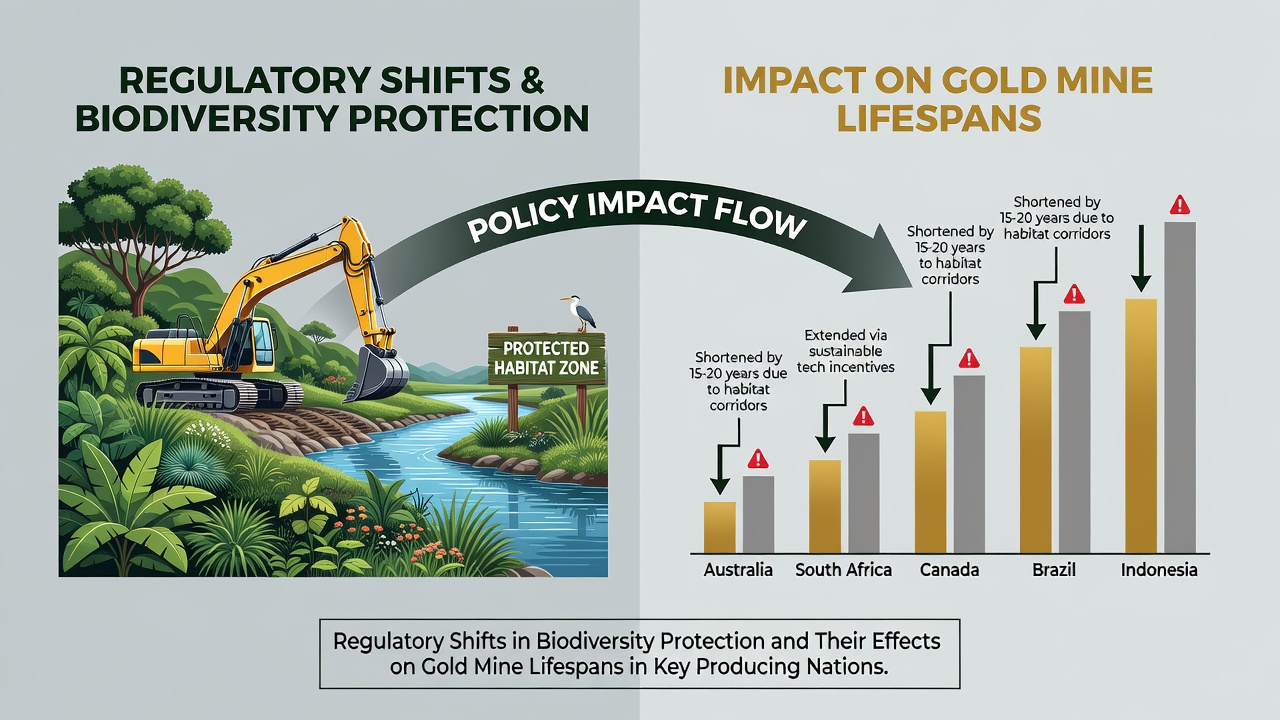
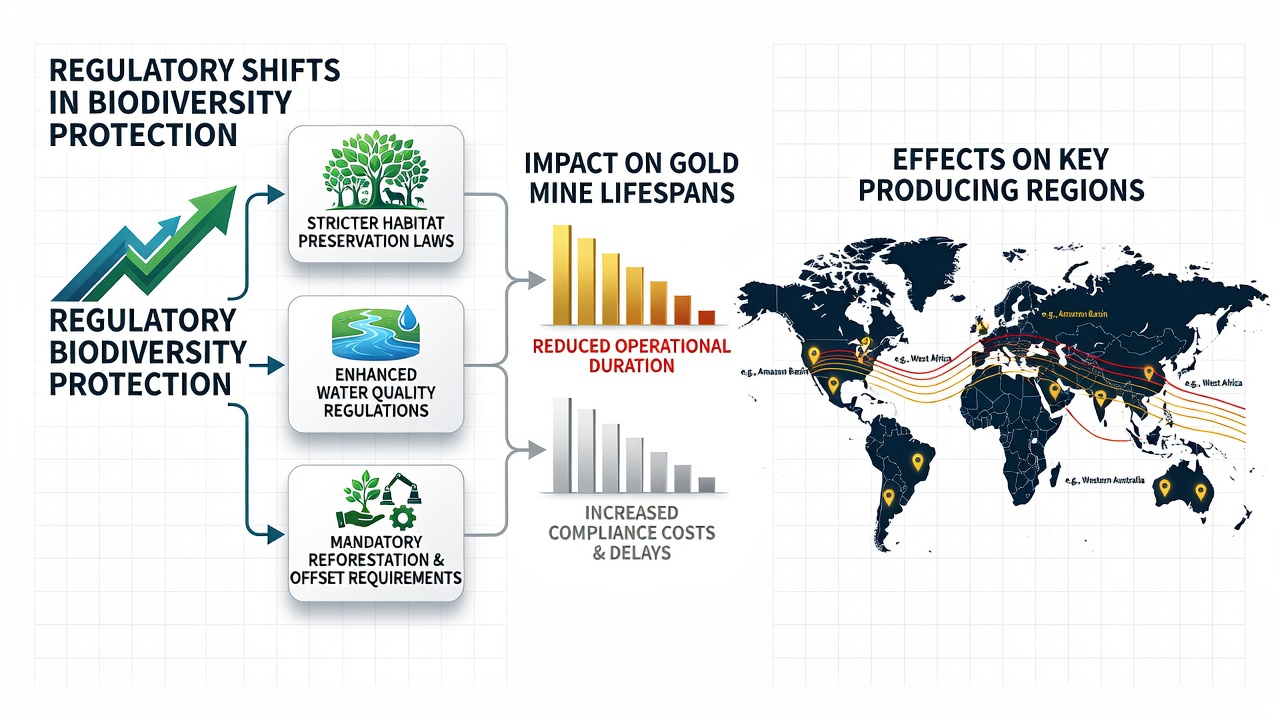
Countries with major gold production have introduced updated biodiversity rules over the past decade, and these changes alter how long mines can operate before reaching regulatory limits on habitat disturbance. Australia, Canada, Peru, and South Africa each updated their environmental statutes between 2023 and 2025, requiring operators to demonstrate measurable biodiversity outcomes before permits for expansion receive approval. Data from national mining agencies show that several projects now face shorter operational windows because restoration timelines and offset requirements extend beyond original feasibility studies.
Policy Updates Across Major Producers
Australia revised its Environment Protection and Biodiversity Conservation Act in late 2024, adding stricter thresholds for species recovery plans that directly affect open-pit developments in Western Australia and Queensland. Mines seeking extensions must now submit offset packages that achieve a net gain within fifteen years, a standard that forces earlier closure planning when suitable land for offsets proves scarce. Canadian provinces followed a similar path when federal species-at-risk legislation received amendments in 2025, mandating cumulative impact assessments that include neighboring operations. Operators in Ontario and British Columbia report that these assessments add twelve to eighteen months to approval cycles, compressing the revenue-generating phase of mid-sized deposits.
Peru strengthened its environmental impact assessment framework through the Ministry of Environment in 2024, linking permit renewals to measurable progress on forest connectivity corridors. Several gold projects in the Cajamarca region received notices that further stripping of vegetation will require proportional restoration elsewhere, raising capital costs and prompting some companies to revise mine plans downward. South African authorities updated the National Environmental Management Biodiversity Act in 2023, introducing biodiversity management plans that apply to all new tailings facilities; legacy operations must retrofit or demonstrate equivalent outcomes, which has accelerated closure schedules at older underground mines in the Witwatersrand basin.
Measured Effects on Mine Lifespans
Industry statistics compiled by national geological surveys indicate that average permitted lifespans for gold projects declined by 8 to 14 percent in jurisdictions with updated rules. Australian data released in mid-2026 reveal that four large open-pit operations adjusted their end-of-mine dates forward by three to seven years after offset shortfalls emerged during routine audits. Canadian regulators documented similar patterns, noting that two projects in the Abitibi greenstone belt trimmed production schedules when habitat connectivity modeling showed insufficient recovery margins. These adjustments translate into earlier decommissioning of processing plants and workforce reductions, though reclamation bonds already set aside cover the accelerated timelines in most cases.
Researchers at the University of British Columbia tracked 22 gold operations across four countries and found that regulatory requirements for long-term monitoring of restored areas add an average of five years to post-closure liability periods. While the active extraction phase shortens, total project duration from first permit to final sign-off lengthens because companies must prove biodiversity stability before regulators release financial assurances. This pattern appears consistently in Australian and Peruvian case studies, where offset monitoring extends beyond original closure certificates.
Regional Variations and Compliance Strategies
Operators respond differently depending on local geology and available offset markets. In Australia, some companies purchase credits from established biodiversity stewardship sites, allowing them to maintain original production schedules while meeting net-gain targets. Canadian firms more frequently redesign waste rock storage to avoid sensitive wetlands, which preserves reserves but increases hauling distances and operating costs. Peruvian projects have begun joint ventures with conservation organizations to secure corridor land upfront, front-loading expenses yet reducing later delays during permit renewals. South African operations increasingly rely on in-pit backfilling combined with native vegetation trials to satisfy connectivity goals, a technique that shortens surface disturbance but requires earlier investment in geotechnical studies.
September 2026 marks the first full reporting cycle under several of these revised frameworks, and preliminary submissions from operators indicate that adaptive management plans now form a standard component of annual environmental returns. Government agencies in multiple jurisdictions have published guidance documents clarifying how biodiversity metrics integrate with existing mine closure cost estimates, giving companies clearer pathways for adjusting lifespans without triggering enforcement actions.
Conclusion
Regulatory updates focused on biodiversity outcomes have produced measurable shifts in gold mine operational timelines across leading producer nations. Permit conditions now embed quantitative recovery targets that influence both the length of active mining and the duration of post-closure obligations. National datasets confirm that companies adjust production schedules and capital allocation in response, while offset markets and redesigned mine plans offer pathways to compliance. As September 2026 reporting deadlines pass, further refinements to monitoring protocols will likely shape the next round of lifespan projections for projects still in development.